Basket Weaving Workshop
October 17 (1pm-3pm) – Carolyne Edwards of the Quinn Research Center leads a basket-making activity and explains the historic traditions behind the craft.
Hours: Thu 2pm – 5pm, Fri-Sun 11am – 5pm
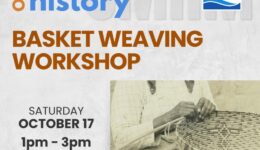
October 17 (1pm-3pm) – Carolyne Edwards of the Quinn Research Center leads a basket-making activity and explains the historic traditions behind the craft.
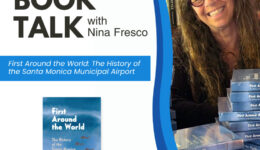
Historian Nina Fresco, draws on more than a decade of research into Santa Monica’s past and explores the airport’s remarkable history and its lasting influence on the city.
August 15, 2026 2pm-3:30pm
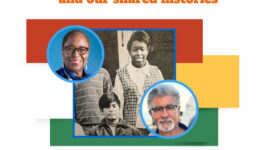
Presented by two longtime friends, through storytelling, images, and guided reflection, we explore how traditions are passed down, evolve over time, and serve as a powerful bridge between generations and communities.
July 18, 2026 11am-1pm
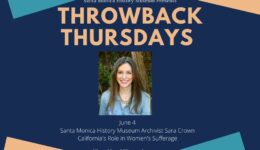
The ratification of the 19th Amendment in 1920 established the right to vote for white women in America. The suffrage movement’s success depended in large part on the groundswell of state initiatives and the organization of local women’s clubs at the turn of the century. As the sixth state to allow women to vote in 1911, California served as a turning point, with a population large enough to double the eligible women voters in the country.
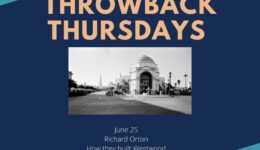
Following WWI, Arthur Letts, owner of The Broadway Department Store was a man rich with cash and dreams of becoming a developer. Letts had his eye on the last big stretch of land between downtown and the beach. Then like a fairy tale out of some developer storybook, Lett’s daughter Gladys married Harold Janss, prince of the Janss Development Family. Westwood was the Kingdom they created.
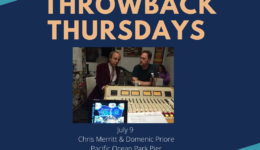
Pacific Ocean Park—or “P.O.P.” as it was commonly known in Los Angeles from the ’50s through the ’70s, was extraordinary in both its glamorous rise and spectacular fall. As a family-oriented attraction in the ’50s with modernist-styled rides designed by Hollywood’s best, P.O.P.’s attendance occasionally surpassed that of Disneyland. Christopher Merritt and Domenic Priore’s spectacular history includes hundreds of images, most of them unseen elsewhere, including original ride designs and illustrations (including Tiki-rich, space age, and nautical rides). P.O.P. was often widely featured in movies and television shows throughout the ’60s. Its Cheetah auditorium hosted important early rock shows, including […]
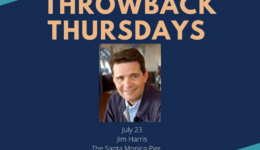
The Santa Monica pier stands as a world-famous icon and beloved by all who live here and all who visit. Jim Harris is the world’s leading authority on this California landmark, and his talks never disappoint.
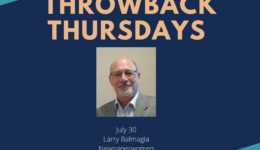
In the 1930s and 1940s L.A. was a newspaper town filled with fedora-sporting, fast-talking, men on a deadline. But two of the toughest and best crime reporters of their day were women. Florabel Muir and Agness Underwood rubbed shoulders with the likes of Bugsy Siegel and Mickey Cohen. Examining their lives and careers provides a fascinating look at the city we were, and the city we’ve become. Larry Balmagia
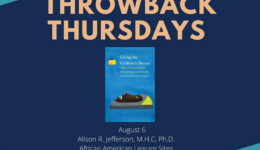
Historian and heritage conservation consultant Alison Rose Jefferson, M.H.C., Ph.D., discusses her new book, Living the California Dream: African American Leisure Sites during the Jim Crow Era. It examines stories, including in Santa Monica, of African Americans who fought for equal access to the state’s recreation and relaxation offerings for their pleasure and business development opportunities as they contributed to the broader U.S. freedom rights struggle during the nation’s Jim Crow era (1900s to 1960s). Leisure, was not an optional add-on to civil rights, but an essential component of liberty.
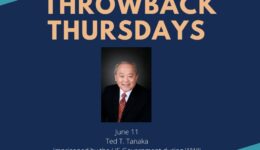
Imprisoned by the US Government during WWII Manzanar, Block 24, Barracks 2, Unit 4 As a US-born Japanese, Ted Tanaka was imprisoned with 120,000 others based solely on nationality, no due process of law. He personally describes photos of his incarcerated 3-1/2 years in a US crude camp. This is relevant today with our current government threats against immigrants and their US-born families.
Santa Monica History Museum
1350 7th Street
Santa Monica, CA 90401
Mailing Address
PO Box 3059
Santa Monica, California, 90408
Thursday 2pm-5pm
Friday Saturday Sunday 11am-5pm
ADMISSION PRICES
Free on 1st Sunday of the month
Join our monthly newsletter and receive news on upcoming events and activities!

The Santa Monica History Museum is a 501(c)(3) non-profit organization.
Donations are tax deductible to the fullest extent allowable by law. Tax ID: 95-3019295
Copyright © 1975-2026, Santa Monica History Museum, All rights Reserved
Privacy Policy | Terms of Use