Since 1975 we’ve been sharing the rich, diverse history of the Santa Monica Bay Area. We are committed to serving the community by providing access to dynamic exhibitions highlighting the depth and complexity of our collective history along with our extensive collection of historical objects and an exceptional image archive. The original historical society museum opened in 1988.
We offer ongoing programming, pop-up exhibitions and community events. We believe museums are for everyone and history belongs to all of us.
The Santa Monica History Museum is one of the largest in the country for a city the size of Santa Monica.
The Santa Monica History Museum acknowledges the Gabrielino/Tongva peoples as the traditional land caretakers of Tovaangar (Los Angeles basin and south Channel Islands). We pay our respects to the Honuukvetan (Ancestors), ‘Ahiihirom (Elders) and ‘Eyoohiinken (our relatives/relations) past, present and emerging.
Our Founding
In 1975, during Santa Monica’s centennial celebration, the city’s rich history took center stage with the presentation of a local history exhibition at the Civic Auditorium by the Centennial Historical Activities Committee. This event led to the establishment of the Santa Monica Historical Society by committee members on October 8, 1975. The society’s mission is to collect, preserve, and serve as the custodian of Santa Monica’s historical heritage.
Ann Funk chaired the Historical Activities Committee for the city centennial celebration. She coordinated its inaugural exhibition at the Civic Auditorium. Ann was the founding Chairwoman of the Historical Society.
Clo Hoover, first woman Mayor of Santa Monica, was the first president of the Historical Society.
Louise Gabriel, one of the founders and incorporators of the Historical Society, founding the Santa Monica Historical Society Museum for the collections to be displayed and shared with the public.
Established in 1988 by Louise and Bob Gabriel the museum initially bore the name Santa Monica Historical Society. Despite limited funding, the Gabriels dedicated three years to the museum’s development, establishment, and operation.
Their vision, and determination form the cornerstone of our work. With a deep love for Santa Monica, Louise and Bob devoted over 50 years to community service in the city. Louise served as the museum’s full-time President for 27 years on a pro-bono basis.
1975
The Santa Monica History Museum was founded under the “Historical Activities Committee” of Santa Monica’s Centennial Celebration in 1975. Its name at that time was the Santa Monica Historical Society and it was designated as the official collector and preserver of the history, art, and culture of the Santa Monica Bay Area. Former Mayor Clo Hoover, the first woman mayor of Santa Monica, was elected the first president.
1975-1985
The society’s historical collection grew tremendously during the first ten years with artifacts, memorabilia, and photos donated by descendants of land grantees and pioneers who were living at that time. The society felt strongly that was essential to share the growing archive with the public but, lacked the necessary funds to start a museum.
1988
The historical society museum opens on Colorado Blvd.
2009
Dec. 08, 2009: The museum was relocated several times and is now at it’s permanent home on the campus of the Santa Monica Main Library thanks to the City of Santa Monica who provided a long term lease.
2013
Sep 10, 2013: The museum celebrates 25 years.
2026 The museum celebrates 50 years.
Today
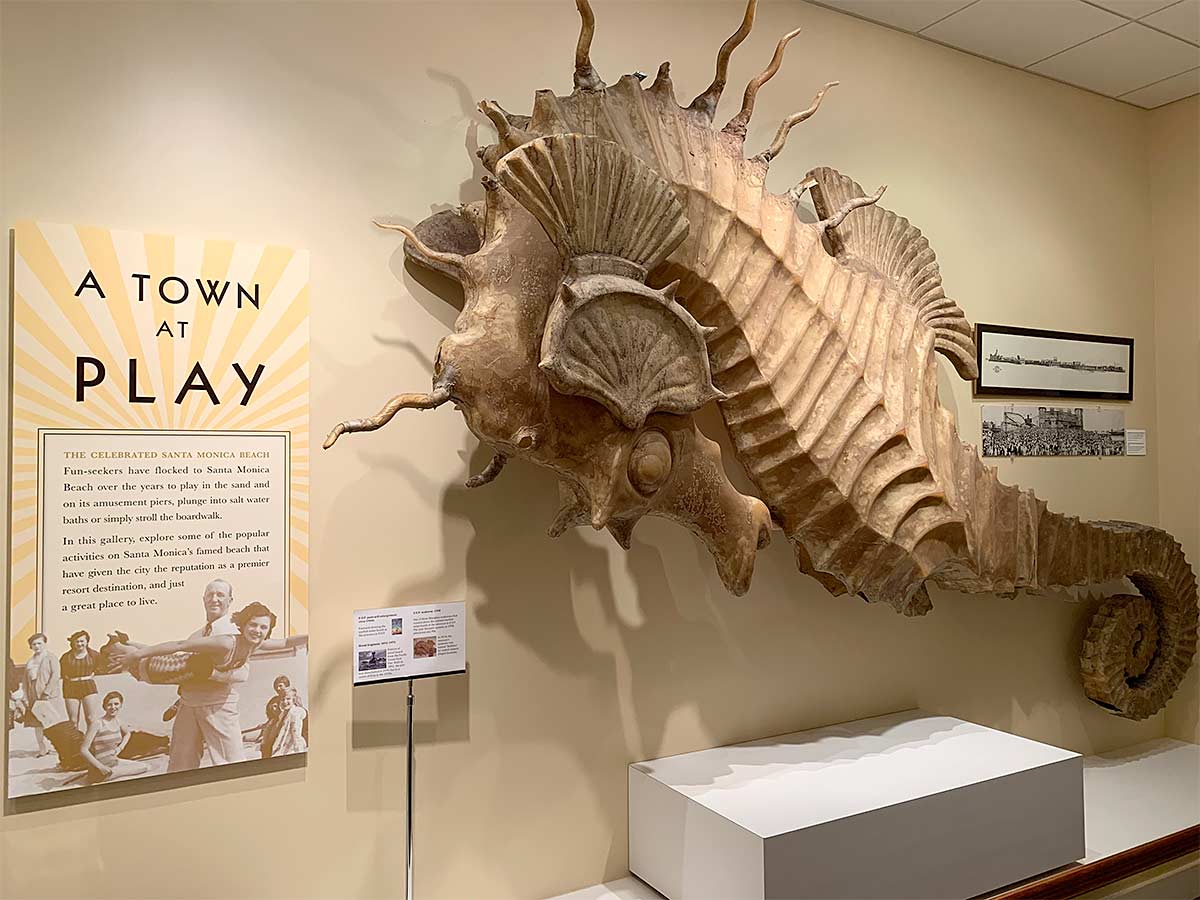
The museum includes a main exhibition hall and four galleries that showcase artifacts from our esteemed permanent collection. In 2023, we forged a partnership with the Quinn Research Center, culminating in the establishment of the Quinn Gallery—a testament to our commitment to diversity, equity, and inclusion. Periodically, our expansive lobby transforms to host pop-up exhibitions, screenings, and lectures.
Our archival treasures have burgeoned to encompass an impressive collection of over six hundred thousand rare photographs, ranking among the most extensive in Southern California. Catering to a diverse audience spanning all age groups, the museum is handicap-accessible and offers a myriad of experiences, including tours, special events, lectures, children’s workshops, and comprehensive research services. Tailored docent-led tours are also available for school groups, youth organizations, and elderhostel/road scholars, enhancing the museum’s commitment to educational outreach.